Showing posts with label Sacred Kingfisher. Show all posts

Tuesday, November 26, 2013

HORROCKS BUSH BIRDS


A selection of photos of some of the birds that live in the patchy bushland and coastal scrub around Horrocks WA, where we are currently living and working. I have compiled a list of over 80 species within a 5 km radius of the town, of which well over half have been observed in the aforementioned habitats, with many of these around the caravan park.


View of Horrocks from escarpment with caravan park at centre


A pair of Little Eagles perch in the gums in the van park occasionally, but are generally seen soaring along the edge of the limestone escarpment behind town. Nine species of raptor frequent the area, so there's plenty of tucker around, including the wild rabbits that we sometimes see scampering off into the scrub. 


Little Eagle


A pair of Kingfishers are making their presence known with their monotonous contact calls and swift, direct flights to pick up prey from the ground.


Sacred Kingfisher


Tree Martins abound with many nesting in under the eaves of some of the holiday houses, although tree hollows would be their natural preference. They also like to feed along the shoreline, a joy to watch with their aerial antics.


Tree Martins


The one below was taking advantage of a sprinkler to cool off a bit.  

Tree Martin


Conversely these swallows were welcoming the midday sun along the back of a shed. I have seen this "sunning" behavior before in other birds such as doves and magpies and of course cormorants.  
An interesting article on this phenomenon here:  http://birdlife.org.au/australian-birdlife/detail/sunny-side-up


Welcome Swallow


I've noticed a distinct lack of  parrots and cockatoos, with only two species prevalent here, Australian Ringneck, with a small group around the van park and the sporadic flocks of Galahs flying by. Probably because of the paucity of nesting hollows, with much of the native vegetation long ago removed for wheat and sheep farming.


Australian Ringneck


A very common, introduced species around the park and surrounding coastal scrub is the Laughing Dove with its somnolent chuckling call, a lovely sound that can put you in the mood for an afternoon nap.


Laughing Doves


Singing Honeyeaters are constantly on the move, and like many of their family do not need to rely solely on flowering plants to get by, with insects making up a large part of their diets.  


Singing Honeyeater


Their feisty cousins the White-plumed Honeyeaters rule the roost in the park, with this specimen one of a number of young birds constantly begging to be fed.


I was pleased to come across a lifer while exploring some thick creek side scrub, one of the Petroicidae family, and this one being unique to Western Australia. It was quite shy compared to it's relative and one of my favourites, the Eastern Yellow Robin. As we continue our travels early next year I hope to find a few more endemics in the south west of this huge state, including the Western Yellow Robin.  


White-breasted Robin


While checking out some Aboriginal rock art at Willy Gully caves, we spotted this Pardalote using an abandoned Fairy Martins mud nest to rear its own young. 


Striated Pardalote


Willy Gully Caves rock art


A couple of Fairy-wren species also utilize the abundant coastal vegetation around Horrocks with the White-winged version preferring the low lying, salt tolerant plants closer to the beach.   


White-winged Fairy-wren - male


And the Variegated liking the taller, thicker scrub along the dunes and escarpment.


Variegated Fairy-wren - female


A link here to a previous post on my experiences with these beautiful little birds in WA:


Cheers and Happy Birding


Monday, March 18, 2013

BREWARRINA BIRDS


After our stay at Gundabooka it was off to Brewarrina, where we found a camp site next to the Barwon River about six kilometres from town. It was a lovely spot with the constant sounds of a variety of birds always evident in the background.


Restless Flycatcher

This flycatcher lived up to its name, constantly flitting over the water, snapping up insects in mid-air.


Restless Flycatcher


Stalking along the banks of the river was one of our larger species of water birds, along with a couple of others of the same family, all intent on a spot of fishing.


White-necked Heron


White-necked Heron, Great Egret & White-faced Heron


A soft trilling call in the trees near our van alerted me to the movements of this White-bellied Cuckoo-shrike. It was a dark phase bird, the first time I had seen this form of a species I don't often find, probably because of its quiet and unassuming nature.   


White-bellied Cuckoo-shrike 


Barwon River at sunset


In the waning light of the setting sun I was able to capture this kingfisher watching for that last bit of tucker before retiring for the evening.


Sacred Kingfisher


Large flocks of Cockatiels (or Quarrions, derived from the Aboriginal - guwarrayin) were ever present in the nearby croplands. I love seeing these elegant and smallest members of the cockatoo family wheeling through the air, with their plaintive calls of "weero" accompanying every flight.


Cockatiels


Cockatiels


The bird list for our camp site and the close surrounding area came to about fifty species including Barking Owl, which we heard but failed to locate.


Cheers & Happy Birding


Friday, June 15, 2012

BACK IN QUEENSLAND


Back on the Sunshine Coast, Queensland, while we wait for repairs to our caravan which threw a wheel in our haste to get home last month. Our insurance company, as well as paying for the repairs are accommodating us for the duration. So a chance to do a bit of local bird watching had us wandering along the foreshore at Golden Beach where the opportunity to photograph a few was too hard to resist.


Little Egret


Little Pied Cormorant


Not being a wader expert I had some difficulty identifying the bird below, but after consulting my field guides and comparing my photos and movie footage with some internet examples, I'm thinking Grey-tailed Tattler. I have seen them before but only in groups with other roosting waders. This one was a loner and quite actively feeding. Any thoughts?


Grey-tailed Tattler?


Sacred Kingfisher

Willie Wagtail


We are currently residing in a small holiday house at Bli Bli not far from the local attractions of Mt  Coolum and Maroochydore and only a short walk from the Maroochy Wetlands Sanctuary where we strolled along the boardwalk to the sounds of whistlers, honeyeaters and gerygones. 


Mt Coolum


Maroochy River & Maroochydore


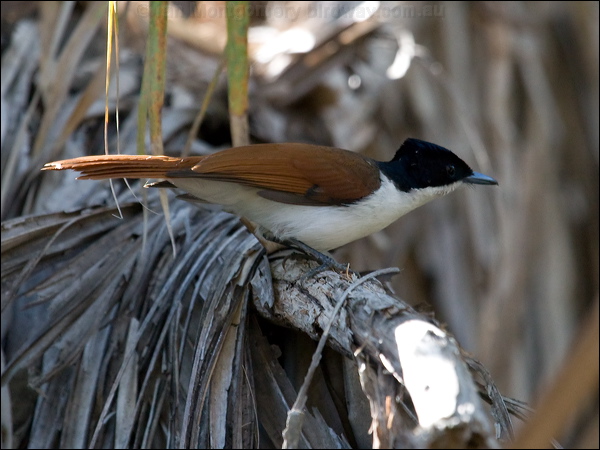
These Ibis were about the most conspicious birds in the wetlands, the smaller bush birds staying mostly out of camera range. We also got a glimpse of a lovely female Shining Flycatcher, a resident of the mangrove wetlands here but not always easy to find.  


White Ibis


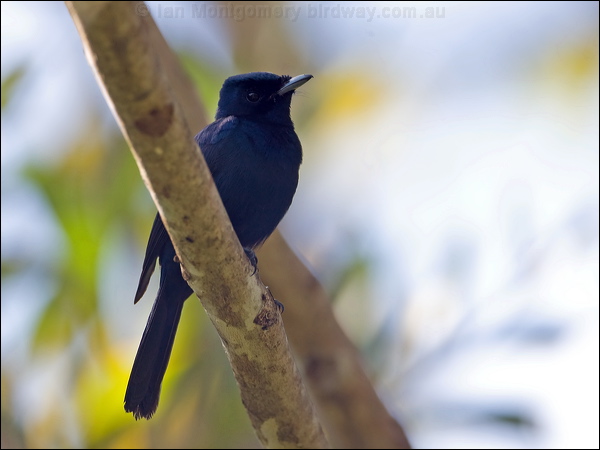
The flycatcher photos below are courtesy of Ian Montgomery's wonderful website: http://birdway.com.au/index.htm.  To the uninitiated they seem like two different species, so pronounced is their sexual dimorphism. Besides being found along the coast of Queensland their range also includes New Guinea and Indonesia.  


Shining Flycatcher - female (photo - I.Montgomery) 


Shining Flycatcher - male (photo - I.Montgomery)


Close by to the Sanctuary is a small lake that usually has a few waterbirds on it and this day, besides the Black Ducks, Chestnut and Grey Teal were a couple of small groups of Whistling-Ducks, giving me a great opportunity to compare the two species at close range. Both are fantastic birds that always give me a thrill whenever I hear and then see a large flock flying overhead. They seem to have become a lot more prevalent on the Sunshine coast over the last decade. 


Plumed & Wandering Whistling-Ducks


Wandering Whistling-Ducks  


Wandering & Plumed Whistling-Ducks


Tuesday, May 15, 2012

CAPERTEE CAPERS


From the Hunter Valley we headed south towards Glen Davis on the eastern border of the huge Wollemi National Park with an overnight stop at Battery Rock rest area on the way, where we discovered this unusual columnar basalt formation. The only other place we have seen this type of rock is at Mt Scoria near Bileola in central Queensland. See: http://www.derm.qld.gov.au/parks/mount-scoria/culture.html 
   

Battery Rock


While taking photos of the spectacular sandstone escarpments of the Capertee Valley, where Glen Davis is situated, we could'nt miss this large raptor perched in a dead gum.


Wedge-tailed Eagle


The scenery around the Valley was amazing and it's difficult to convey in pictures or words the beauty of the area. You just have to see it for yourself!


The Capertee Valley


One of the main reasons for our visit was to look for the rare and endangered Regent Honeyeater and though we had a good look around the only one we saw was on a sign! We were probably about a month late, the last confirmed sightings had been back in late December 2011. The breeding season would have finished earlier and the birds had moved on since.


We weren't disappointed though by the variety of birds in the Valley and I scored a couple of lifers with a pair of Rock Warblers and a group of Chestnut-Rumped Heath-Wrens, all seen only a few minutes walk from our campsite at Glen Davis. Although I didn't snag any pics of these elusive birds there were others that were more obliging.   

Jacky Winter


Sacred Kingfisher


Sulphur-Crested Cockatoos


White-Plumed Honeyeater


Glen Davis itself was once a bustling mining town and the ruins of the shale oil processing plant are still obvious. It was the sole source of petroleum for Australia at one stage during World War Two. 


A return visit to the Valley is on the cards for us, spring being the best time to see the Regent Honeyeaters. Meanwhile a trip to Australia Zoo where this stunning species is on display is the next best thing for those of us yet to experience an "in the wild" sighting. See: http://www.australiazoo.com.au/our-animals/amazing-animals/birds/?bird=honeyeaters&animal=regent_honeyeater