For a few weeks in the summer of 2012/13 we were based near Hobart, in our van in the backyard of my brother and his partners place at Droughty Point. The back deck of the house overlooks Ralphs Bay, a great place to unwind after sampling the scenic delights and birding opportunities of the area.
 |
Ralphs Bay
|
While relaxing on the aforementioned deck we were entertained by the local swallows, which came in to rest on the railing in between their graceful insect chasing flights.
 |
| Welcome Swallow |
One of the more common introduced birds in Tasmania was prevalent around the house too.
 |
| European Goldfinch |
No visit to Hobart is complete without a drive up to the summit of Mount Wellington, which at 1271 metres towers above the city and makes for one of the most outstanding viewing points in any of our capitals here in Australia.
 |
| Tasman Bridge and Derwent River |
It also makes for a stunning back drop to the city, but for some reason I failed to take a snap of this brooding giant on Hobart's doorstep, on this trip. I have included an image from a brief visit a few years back, when the mountain was dusted in a light covering of autumn snow.
 |
| Mount Wellington - April 2009 |
With numerous walking tracks through varying habitats from temperate rainforest to alpine wilderness, the mountain is a bush walkers paradise.
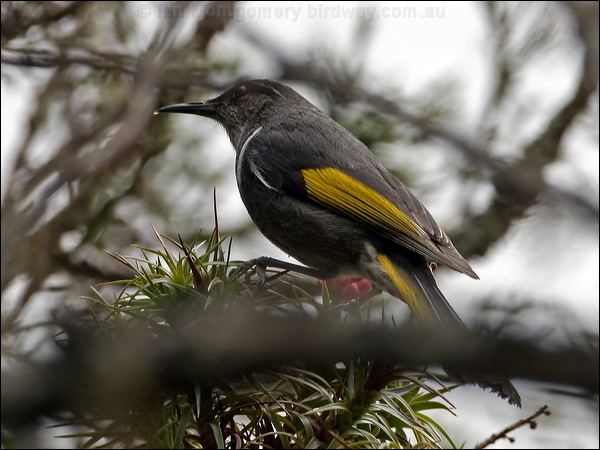
Flowering shrubs were in colourful profusion and as we wandered along one of the tracks we were greeted by the high pitched calls of Crescent Honeyeaters. These birds breed in the high country in summer and disperse to lower areas in the cooler months.
 |
| Crescent Honeyeater |
The wildflower display was the highlight of our visit to the summit and combined with the breathtaking views gave us a very memorable experience.
 |
| Kerosene Bush |
 |
| Mountain Pinkberry |
 |
| Tasmanian Waratah |
 |
| Wiry Bauera and Alpine Heath |
 |
| Silky Pimelea |
Most of Tasmania's twelve endemic bird species can be found within the reserve known as Wellington Park, with two of the more conspicuous ones pictured below.
 |
| Black Currawong |
The currawong is also an altitudinal migrant and the wattlebird at up to 45 centimetres in length, is the largest of the Australian honeyeaters
 |
| Yellow Wattlebird |
I was able to snaffle all the endemics during our ten week sojourn and also pick up some specialities like Swift Parrot, Pink Robin, Beautiful Firetail and Forest Raven. The bird life, except for some of the more common species, is not particularly prolific and some of the smaller bush birds like the Scrubtit and the endangered Forty-spotted Pardalote can be difficult to locate. But patience and time usually bring about some very rewarding birding experiences.
If the wildlife is a bit thin on the ground, there is always more incredible scenery to contemplate.
 |
| The Organ Pipes |
This rock climber was taking his viewing experience a little more seriously than most!
 |
| View to South West Wilderness from summit. |
 |
| Hobart and suburbs |
Not long after we departed there were some massive and destructive bush fires to the east of my brothers property, and although they weren't directly affected, some wind changes brought smoke and ash to their vicinity.
 |
Ralphs Bay, 4/1/13 (photo by Jo Burke)
|
An indispensable publication for exploring Tassie and a great companion to the field and "where to find bird" guides is "Where to See Wildlife in Tasmania" by Dave Watts & Cathy Plowman. Highly recommended!
Cheers & Happy Birding